
How to Start a Referral Program That Drives Real Growth
Starting a referral program is pretty simple on the surface: figure out your goals, pick rewards people actually want, and make sharing dead simple. It's all about turning your happiest customers into a powerful, word-of-mouth growth engine that pretty much runs itself.
Why a Referral Program Is Your Untapped Growth Channel
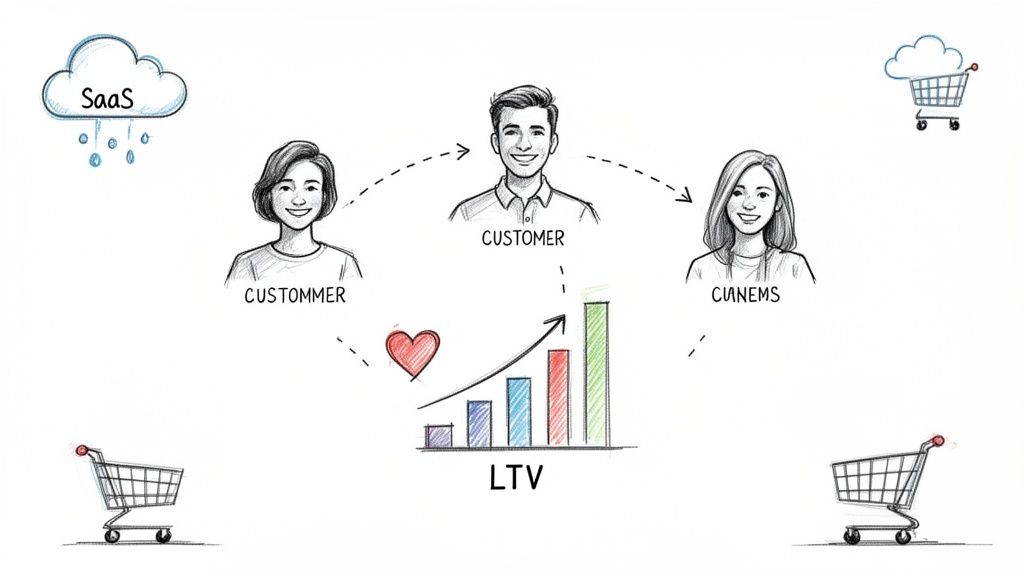
Before we jump into the "how," let's talk about the "why." A great referral program isn't just another marketing tactic to throw on the pile; it's a powerful growth engine just waiting for you to turn the key. Businesses are quickly figuring out how to turn their loyal customers into their most effective sales force.
The Power of Trust in Marketing
Think about it for a second: who are you more likely to trust? A flashy ad you saw on Instagram or a recommendation from a friend who's already using a product? The data is clear: referred leads convert 30% higher than leads from any other channel.
That's because referrals come with trust baked right in. They completely bypass the skepticism that usually greets traditional advertising.
This trust translates directly into rock-solid business metrics:
Higher Lifetime Value (LTV): Referred customers have a 16% higher LTV on average. They come in with a positive impression and are just more likely to stick around.
Lower Acquisition Costs: Instead of pouring more and more money into ads with diminishing returns, you're rewarding your existing customers. It's a far more sustainable and cost-effective way to grow your business.
Stronger Community: A referral program creates a sense of partnership. Your customers become advocates who are genuinely invested in seeing you succeed.
From Referrals to Affiliates
While referral programs are all about customers sharing with their friends and colleagues, they share a lot of DNA with affiliate marketing, where partners promote your brand for a commission. Understanding the difference is key to building out a complete growth strategy. You can learn more about how a dedicated affiliate program can amplify your reach right alongside your referral efforts.
The core idea is simple: empower those who already believe in your product to spread the word. Whether it's a happy customer or a professional partner, you are building a scalable, word-of-mouth acquisition channel that grows with you.
Nail Your Goals and Find Your Best Advocates
A referral program without a clear goal is just a giveaway. Seriously. If you want it to actually grow your business, you need to define what success looks like before you launch. Just aiming for "more customers" is way too vague and won't tell you if your program is actually making you money.
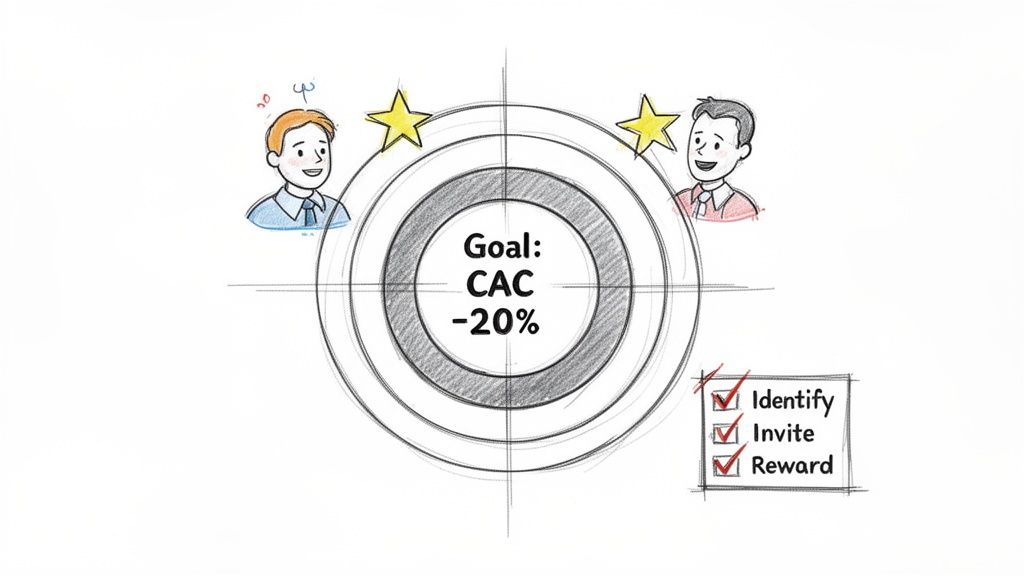
Instead, tie your program to a specific business objective. A SaaS company, for instance, might focus on lowering its customer acquisition cost (CAC) by 20%. A direct-to-consumer e-commerce brand, on the other hand, could target a 15% increase in average order value (AOV) from new customers who come through a referral.
See the difference? Specific, measurable, and tied to the bottom line.
Define Your Key Metrics
Your goals will dictate which metrics you obsess over. It's about more than just counting up the number of referrals; you need to look at the entire customer journey that follows.
For Subscription Services: Your primary goal might be to reduce churn. In that case, you'd measure the retention rate of referred customers and compare it to customers from other channels. Are they sticking around longer?
For E-commerce Brands: A key metric could be the repeat purchase rate. A successful program isn't just about the first sale—it's about bringing in new shoppers who become loyal, repeat buyers.
A well-defined goal gives your program direction and purpose. It transforms your referral strategy from a simple promotional tactic into a predictable engine for sustainable growth.
Once you know what you're aiming for, the next piece of the puzzle is figuring out who to ask. The secret? Don't ask everyone. Your best advocates are the customers who are already showing you they love what you do.
Pinpoint Your Brand Champions
Look for the signals. Certain customers are a perfect fit for your program because they're already primed to share their positive experiences without much of a push.
Start by digging into your data to find customers who have:
A high Net Promoter Score (NPS): Anyone who rates you a 9 or 10 is literally called a "promoter." These are your people.
Left positive reviews: They've already gone to the trouble of publicly endorsing your brand.
A long purchase history: Long-term customers have a deep-seated trust in you, making their recommendations incredibly powerful.
This targeted approach is especially effective for SaaS startups. The software industry already leads the pack with a 4.75% referral rate, blowing past the all-industry average of just 2.35%. Better yet, customers who come in through a referral spend 25% more and have a 37% higher retention rate, making them ridiculously valuable. If you're curious, you can check out more referral marketing statistics to see the full impact.
Designing Referral Rewards That Actually Motivate
The reward you offer is the engine of your entire referral program. If you get it wrong, even the slickest system will stall out. The real secret here is to think beyond a simple discount and tap into the psychology of what makes your customers want to share.
A great place to start is with a double-sided incentive. This is where both the person referring and their friend get a reward. It completely reframes the interaction. Instead of a purely transactional "ask," it becomes a mutually beneficial exchange. The referrer feels like they're giving a gift, not just chasing a bonus.
This model is incredibly popular for one simple reason—it just works. In fact, a massive 78% of businesses use double-sided programs to create that perfect win-win feeling.
Cash vs. Credit: Which Reward Works Best?
It's the classic debate: should you offer cold, hard cash or store credit? While cash has universal appeal, store credit and product-specific rewards can be a much smarter move for your business.
Cash Rewards: These are super motivating and easy to understand. Globally, 71% of companies lean on cash bonuses, making them a go-to choice, especially if your product isn't something people buy frequently.
Store Credit or Discounts: This is the best option for encouraging repeat business. It brings both the original advocate and the new customer right back into your world. It's a perfect fit for e-commerce brands and subscription models where boosting lifetime value is the name of the game.
Tiered Rewards: Got some super-fans who are sending tons of business your way? A tiered system keeps them in the game. The rewards get better as they hit new referral milestones, which gamifies the whole experience and recognizes their loyalty.
Don't forget, customers who come through referrals are absolute gold. Research shows they stick around at a 37% higher rate, spend 16% more, and are 27% more loyal than customers acquired from other channels. You can dig into more of these powerful referral marketing trends on Entrepreneurshq.com.
The best incentive isn't always the most expensive one. It's the one that aligns with your customers' motivations and your business goals, creating a value exchange that feels both generous and smart.
Choosing the Right Referral Incentive Model
Deciding on the perfect reward structure can feel tricky, but it really comes down to your business model and what your customers actually value. A SaaS company might offer a credit on the next month's bill, while an online course creator could give away a free premium lesson. This table breaks down the most common models to help you find the right fit.
| Incentive Type | Best For | Pros | Cons |
|---|---|---|---|
| Double-Sided | Most e-commerce and B2C businesses | Feels like a gift, not a transaction. Motivates both parties equally. | Can be slightly more expensive to run than single-sided rewards. |
| Single-Sided (Referrer Only) | High-value B2B or affiliate models | Simple to manage. Can offer a larger reward to the referrer. | Can feel transactional and less genuine to the new customer. |
| Store Credit/Discounts | Businesses with high repeat purchase rates (e.g., subscription boxes, fashion) | Drives customer loyalty and increases lifetime value (LTV). Cost-effective. | Less appealing if customers don't plan to buy again soon. |
| Cash Rewards | Services or products with low purchase frequency | Universally appealing and highly motivating. Simple to understand. | Doesn't directly encourage repeat business. Can attract lower-quality, reward-focused referrers. |
| Tiered Rewards | Programs aiming to cultivate super-advocates | Keeps top performers engaged and motivated. Gamifies the experience. | Can be complex to set up and track. May not motivate casual sharers. |
Ultimately, the goal is to land on a reward that feels valuable enough to spark action while still being profitable for your business. Test different approaches and see what resonates most with your audience—you might be surprised by what works.
Building a Frictionless Referral Experience
A brilliant idea is only as good as its execution. You've defined your goals and designed rewards that feel exciting—now comes the part where you build the technical foundation that makes sharing dead simple for your customers. If the process is clunky or confusing, you'll lose all that hard-earned momentum before you even get started.
At the heart of any referral program is the unique referral link. This is the magic ingredient that tracks where new customers come from. When an advocate shares their link and a friend clicks it, a tracking cookie gets placed in their browser. This little piece of code ensures that when they eventually buy something, the original advocate gets the credit they earned.
This brings you to a major crossroads: do you build this system yourself or use specialized software?
DIY vs. Specialized Software
Going the DIY route gives you absolute control, but it demands serious development resources to build and, more importantly, to maintain. You'd be on the hook for creating a system that generates unique links, tracks every conversion, and handles all the reward payouts. For most businesses, that's just not practical.
This is where referral marketing software comes in. These platforms handle all that heavy lifting for you, and there's a reason the market for these tools is projected to hit $7.24 billion by 2031. They solve this exact problem for countless subscription apps and DTC brands. After all, referred customers are pure gold—they're four times more likely to make a purchase, and these platforms make acquiring them a breeze. You can dig into more referral marketing trends on Propellocloud.com.
This infographic breaks down the core flow of structuring your rewards, a process that becomes infinitely simpler with the right tool in your corner.
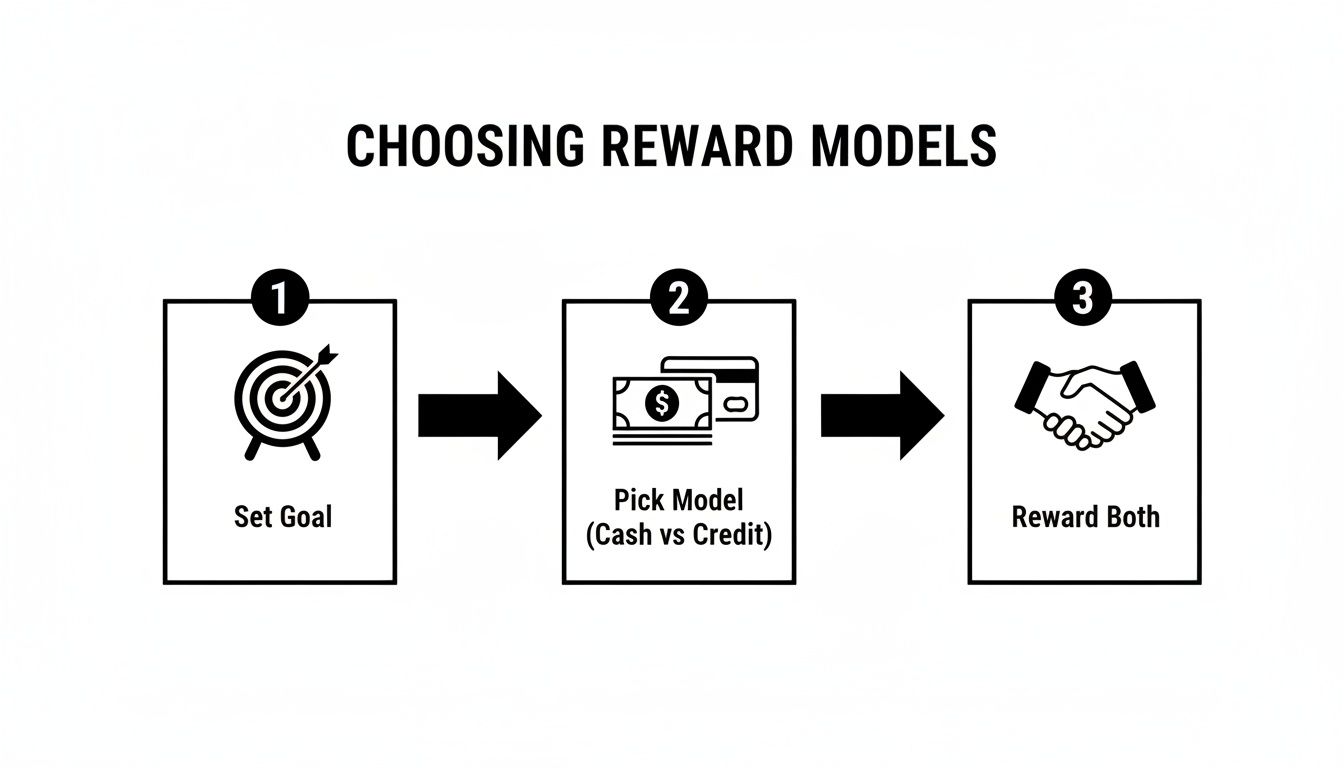
As you can see, a solid reward strategy begins with a clear goal, moves to choosing the right model, and ends by rewarding both the advocate and their friend. This flow is what makes a program feel fair, motivating, and worth participating in.
The best referral experience feels invisible. For the customer, sharing should be as simple as copying a link. For you, tracking and rewards should be completely automated.
Modern platforms automate everything from link generation to reward payouts, ensuring no one is left waiting or wondering. This includes using tools like custom email tracking links to make sure every single referral is captured accurately, no matter how it's shared. A system that just works builds trust and keeps your best customers coming back to share again and again.
Get the Word Out and Drive People to Your Program
Getting your referral program live is a great first step, but it's just that—a first step. Now you have to actually market your marketing. You can't just build it and expect customers to stumble upon it. To get real momentum, you need a smart, consistent promotion plan.
Start by making a splash across the channels where your customers already live. An email blast to your entire contact list is a solid opening move. But don't stop there. Follow it up with an in-app notification or a persistent banner on their dashboard. You want to meet them where they are.
The timing of your ask is also a huge piece of the puzzle. The absolute best time to ask for a referral is right after a customer has had a great experience with your company.
Think about those peak moments of happiness—the thank you page after a purchase, or the screen confirming their support ticket has been resolved. The customer is feeling good about you, which makes them far more likely to share that positive feeling.
Make Sharing an Absolute Breeze
If you want advocates to share, you have to make it ridiculously easy for them. Any friction at all will kill your participation rates. The solution is to build a simple, dedicated toolkit page where they can find everything they need in one spot.
Here's what that toolkit absolutely must include:
A Unique Referral Link: This needs to be front and center. Add a "copy with one click" button to make it foolproof.
Pre-Written Social Posts: Draft a few compelling, ready-to-go posts for platforms like X (formerly Twitter), LinkedIn, or Facebook. Let them just copy, paste, and share.
An Email Template: Give them a simple, forwardable email that clearly explains the benefits to their friend. This makes sharing feel like a genuine, helpful recommendation, not a sales pitch.
By arming your advocates with these simple tools, you're doing more than just asking for a favor. You're setting them up for success and turning a potential chore into a quick, rewarding action.
Common Questions About Building a Referral Program
Even with a perfect plan, questions are going to pop up. When you're figuring out how to launch a referral program, a few common hurdles always seem to appear. Let's tackle them head-on so you can get from planning to launch without a hitch.
Frequently Asked Questions
Have a question not in here? Contact us
- What Is a Good Referral Rate to Aim For?
What's considered "good" really depends on your industry, but a solid benchmark for a brand-new program is a 5-15% participation rate among your active customers. Once it's up and running, you'll want to aim for a share rate—the percentage of participants who actually share their link—of around 25-35%. The software world often pulls in the highest conversion rates, hovering around 4.75%. For everyone else, the average is closer to 2.35%. The real key isn't hitting a magic number, but consistently promoting the program and offering incentives people actually want.
- How Much Should I Offer as a Referral Reward?
The right reward is a balancing act between your customer lifetime value (LTV) and what you currently spend to acquire a new customer (CAC). A smart rule of thumb is to keep the reward value below your typical CAC, but make it enticing enough to actually motivate someone. And always, always consider a double-sided incentive. Rewarding both the referrer and the new customer is a surefire way to boost participation. For subscription businesses, offering one month free or a decent account credit is a classic for a reason. If you're in e-commerce, a 15-25% discount or a fixed dollar amount that covers a popular item tends to work wonders.
- What Are the Most Common Mistakes to Avoid?
The biggest pitfalls are almost always a clunky sign-up process, confusing reward terms, and sketchy tracking. If people can't easily find their link or figure out the rules, they'll just give up. It's that simple. Another huge mistake is launching the program and then never talking about it again. You have to constantly remind your customers that it exists and show them what's in it for them. Finally, if rewards aren't delivered quickly and accurately, you'll torch any trust and momentum you've built. It's also critical to play by the rules; you can read up on the legal considerations for referral programs to make sure you're fully compliant.
🎯 Key Takeaways
Referred customers convert 30% higher and have 16% higher lifetime value than other acquisition channels
Start with clear, measurable goals tied to specific business objectives like reducing CAC by 20%
Use double-sided incentives to create win-win scenarios for both referrer and new customer
Focus on your best advocates first - customers with high NPS scores, positive reviews, and long purchase histories
Make sharing frictionless with one-click links, pre-written content, and simple toolkit pages
🚀 Transform Your Growth with Blossu
Ready to turn your best customers into your most powerful growth channel? With Blossu, you can launch an affiliate and referral program in minutes, not months. Automate tracking, rewards, and payouts so you can focus on what matters most. Start for free on Blossu.com and put your word-of-mouth on autopilot.