
Your Complete Referral Program Template for Business Growth
A good referral program template isn't just a document; it's a launchpad. It gives you a fill-in-the-blank foundation for your program's rules, partner agreements, and promotional emails, saving you from that dreaded blank-page paralysis. It is, by far, the fastest path from a good idea to a fully functioning, legally sound referral engine.
Build Your Referral Engine in Minutes, Not Months
Getting a referral program off the ground can feel like a massive undertaking, but it honestly doesn't have to be. For most businesses, the biggest hurdle isn't the technology or the rewards—it's the operational and legal paperwork.
Staring at an empty document trying to draft program rules or a partner agreement from scratch is enough to kill momentum before you even start. This is exactly where a well-structured referral program template changes the entire game.
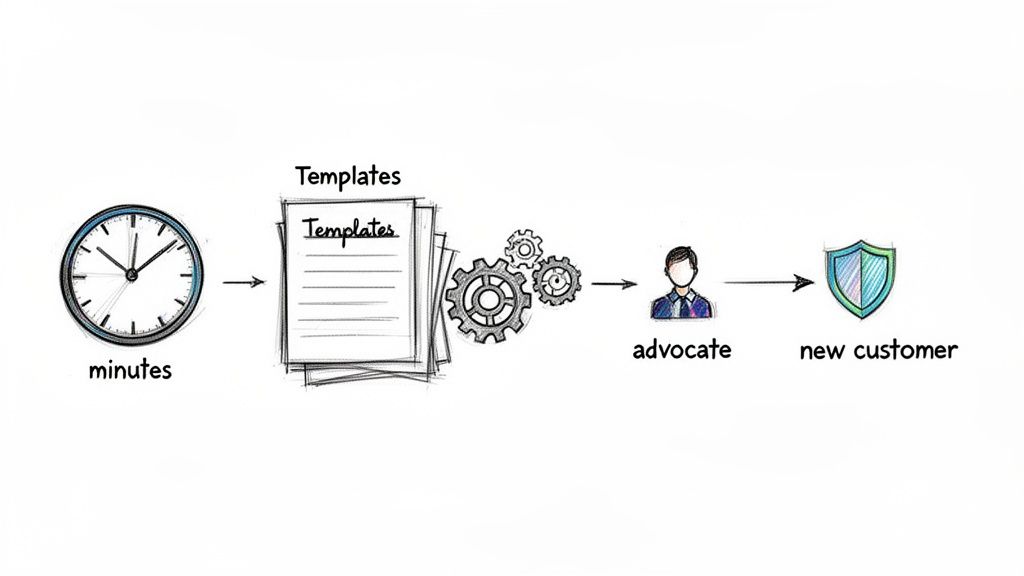
Instead of sinking weeks (or even months) into legal reviews and endless content drafts, you can have your program's entire framework built in minutes. These templates are much more than simple guides; they are the essential documents that form the backbone of any successful program. They create a solid foundation that protects your business, eliminates guesswork for your partners, and makes it incredibly easy for your advocates to sign up and start sharing.
Your Core Referral Program Template Checklist
To make this dead simple, our downloadable package includes every critical component you need for a fast, secure launch. Each document is designed for quick customization—just plug in your brand's details and specific terms, and you're good to go. Think of it as a launch kit for turning word-of-mouth into a predictable revenue stream.
This table breaks down the essentials you'll get in the package.
| Template Component | Purpose | Key Element to Customize |
|---|---|---|
| Program Rules & Guidelines | Clearly defines how the program works, what constitutes a valid referral, and payout terms. | Reward structure, payout schedule, and prohibited promotional methods. |
| Partner Agreement | A simple contract that outlines the legal relationship between you and your advocates. | Your company's legal name, commission rates, and term length. |
| Promotional Email Copy | Ready-to-use email templates for announcing the program, onboarding new partners, and re-engaging them. | Your brand's unique voice, specific product benefits, and call-to-action links. |
| Landing Page Copy | Persuasive text for your referral program sign-up page that explains the benefits and drives action. | The headline, your program's core value proposition, and social proof elements. |
Having this structured approach is crucial for scaling. The global referral marketing industry is projected to hit a staggering $7.24 billion by 2031, and the data shows that referred customers deliver conversion rates30% higher than leads from any other channel.
This kind of growth underscores why having a streamlined, template-driven setup is no longer a luxury—it's a competitive necessity. The opportunity is massive and growing rapidly.
Designing Rewards That Actually Motivate People
A killer referral program template gives you the structure, but let's be honest—the reward is what really drives the action. It's the fuel for your growth engine. Get the incentive wrong, and the whole program sputters out. But get it right, and you can spark the kind of explosive, sustainable growth that every business dreams of.
This isn't about just throwing money at people and hoping for the best. The most effective rewards are deeply psychological. They tap into what your customers truly value and align perfectly with what your brand stands for. It boils down to one thing: knowing what makes your audience tick and creating an incentive they're genuinely excited to share.
One-Sided vs. Two-Sided Incentives
First up, you need to decide who gets the goodies. There are two main ways to structure this, and each has its place.
One-Sided Rewards: In this setup, only the referrer—your current customer—gets rewarded. This can work surprisingly well if you have a fiercely loyal customer base that's already shouting your praises from the rooftops.
Two-Sided Rewards: Here, both the person referring and the new customer get a reward. This "win-win" model is wildly popular for a reason. It makes the new person feel like they're getting a deal and helps the referrer feel like they're giving a gift, not just chasing a commission.
The data is pretty clear on which one wins out. A whopping78% of consumer programs are double-sided, rewarding both parties. It has become the gold standard because it motivates everyone involved.
Choosing Your Reward Model
Beyond who gets paid, you have to decide what they get paid with. Cash is always a strong contender, but it's far from your only option. The best choice is deeply tied to your business model—what crushes it for a SaaS company might completely flop for an e-commerce brand.
Let's break down the most common models that actually work.
Percentage Commissions
This is the bread and butter for most SaaS and subscription businesses. You give the referrer a cut of the revenue from the new customer, usually on a recurring basis for a specific time (think 20% for the first12 months). It's a powerhouse because it gives your partners a real reason to bring in high-quality customers who will stick around for the long haul.
Fixed Bonuses
A fixed bonus is simple and clean: you offer a specific, one-time payout for a successful referral. This could be a $50 gift card or a$25 cash bonus. The beauty here is its instant gratification and clarity. Everyone knows exactly what they're getting. It's a perfect fit for e-commerce shops or businesses selling digital products where the value of a sale is immediate.
Pro Tip: For e-commerce brands, offering a fixed bonus as store credit is a genius move. It ensures the reward money comes right back to your business, basically funding customer retention while driving another sale.
Tiered and Milestone Rewards
If you want to keep your best people engaged, you can gamify the program to encourage them to keep pushing.
Tiered Rewards: The reward gets better as they refer more people. Maybe they earn 10%for their first five referrals, 15% for the next five, and 20% on everything after that.
Milestone Rewards: You can also offer special one-off bonuses for hitting big goals, like a$500 bonus when a partner hits25 successful referrals. This gives your top performers exciting targets to aim for.
These kinds of advanced structures turn a simple referral program into an addictive challenge. By offering escalating rewards, you keep your best advocates fired up long after the initial novelty wears off. This is how you build a loyal army of brand champions and turn your referral program into an engine that doesn't just run—it accelerates.
Choosing the Right Tech to Automate Your Program
If you're trying to track referrals with a spreadsheet, you're setting yourself up for failure. It's not just a headache; it's a surefire way to make mistakes, frustrate your partners, and kill any chance of real growth. To build a referral program that actually drives revenue, you need technology that automates the whole process, from the first click to the final payout.
This doesn't mean you need to invest in some massive, overly complex enterprise software. It's about finding a lightweight, effective system that does the heavy lifting for you. In many cases, a simple JavaScript SDK can be the entire backbone of your tracking, capturing every click and conversion without you having to do a thing.
This diagram shows the kinds of reward models that automation makes possible.
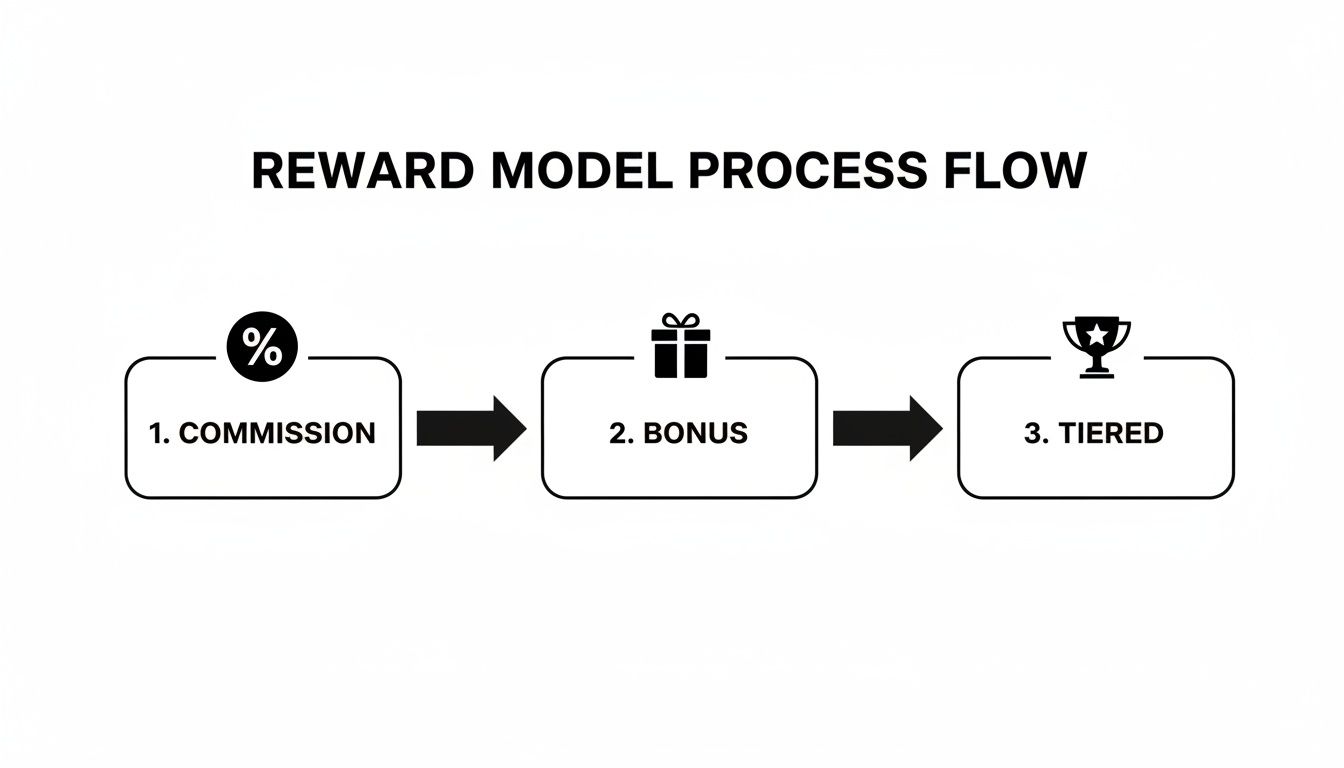
As you can see, the right tech lets you easily handle everything from straightforward percentage commissions to more sophisticated tiered and bonus structures. Trying to manage those by hand would be an absolute nightmare.
Implementing Your Tracking System
First things first: you need to get a tracking script onto your website. This little piece of code is the critical link between a visitor clicking a referral link and making a purchase down the line. Without it, you're just guessing.
Platforms likeBlossu, for example, provide a simple JavaScript SDK. You just copy and paste this snippet into the header or footer of your site. It's a one-time job that usually takes less than five minutes.
Once that SDK is live, it automatically handles three essential tasks:
Identifies the Referrer: When someone clicks a partner's unique link, the SDK reads the referral code and remembers who sent them.
Tracks the Conversion: If that person makes a purchase, the SDK fires off and attributes the sale back to the right partner.
Sends the Data: All this conversion data flows directly into your referral management dashboard, giving you a real-time view of what's working.
This simple setup is the foundation of any scalable program. It eliminates human error and provides the kind of trustworthy data you need to keep your partners happy and motivated.
Automating Commission Payouts
Tracking is one half of the equation; the other is paying your partners accurately and on time. This is where manual systems truly crumble, creating distrust and causing partners to walk away. The fix is to connect your referral platform directly to a payment gateway.
Integrating with a service likeStripeis often a one-click affair. Once connected, your system can automatically:
Log Every Sale: Each successful transaction from a referred customer is captured.
Calculate Commissions: The system applies your reward rules (like a 20% recurring commission) to the sale amount.
Queue the Payout: The correct commission is instantly calculated and added to the partner's account, ready for the next payout cycle.
A seamless, automated payout process is the single most important factor in building trust with your partners. When they see accurate commissions appear in their dashboard moments after a sale, they know the system works and are motivated to keep promoting.
With the right tools, you can build even more advanced payout logic. For businesses that want total control over the partner journey, you can learn more about automation flow builders that let you create custom triggers and actions for your entire program.
A clean interface gives both you and your partners instant clarity on performance, cutting down on disputes and questions about payments.
By combining a lightweight tracking SDK with an integrated payment gateway, you can build a powerful, automated system in minutes, not weeks. This technical foundation, powered by a solid referral program template, frees you from tedious admin work so you can focus on what actually grows your business: recruiting great partners.
Crafting Communication That Drives Action
Let's be honest: a brilliant reward structure and slick tech are completely useless if nobody knows your referral program exists. A program only takes off when the communication is clear, persuasive, and consistent. This is where you get your partners genuinely excited, make sure they understand the rules, and give them the confidence to start sharing from day one.
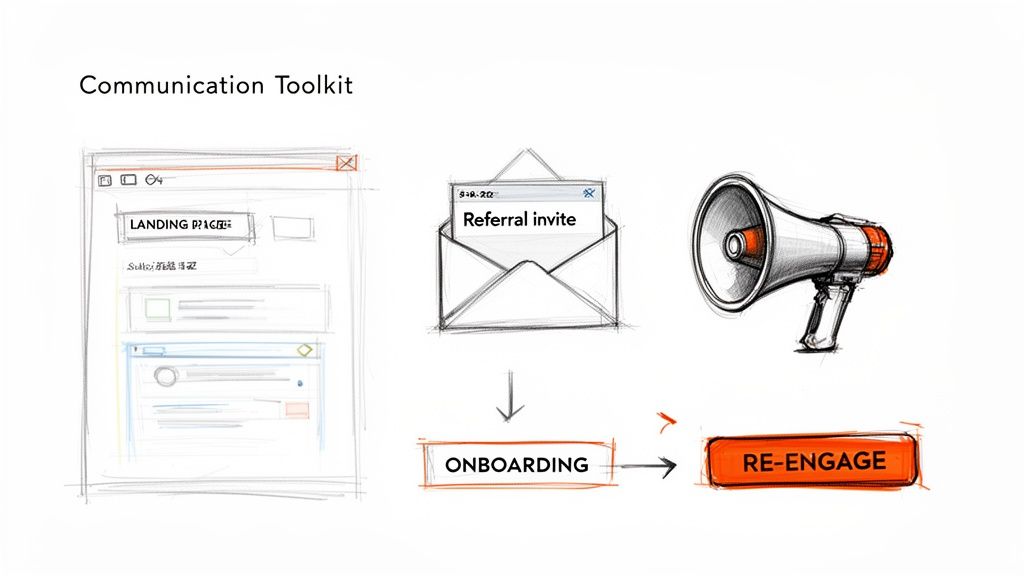
I've seen too many businesses launch a program by quietly adding a link to their website footer and just hoping for the best. That passive approach almost never works. To get real results, you need a proactive communication strategy with dedicated assets for every step of the partner's journey. That's why any completereferral program template needs to include battle-tested copy for these crucial touchpoints.
The High-Converting Landing Page
Your referral program needs a home—a dedicated landing page that acts as the single source of truth. This page has one job and one job only: to sell potential partners on the value of joining. It has to quickly and clearly answer their most pressing questions.
A landing page that actually converts needs these core elements:
A Compelling Headline: Grab their attention immediately. Instead of something dry like "Referral Program," go for a benefit-driven headline like, "Share [Your Brand], Earn 20%Commission."
A Simple Explanation: In just two or three sentences, break down how it works. For example, "Share your unique link with your audience. When they make a purchase, you earn a cash reward. It's that simple."
Clear Benefits: Spell out exactly what's in it for them. Use bullet points to highlight the commission rate, payout schedule, and any other perks you offer.
A Strong Call-to-Action (CTA): Use an action-oriented button that creates urgency, like "Become a Partner Today" or "Start Earning Now."
Your landing page is your primary recruitment tool. It should remove all friction and make signing up feel like an obvious, easy decision. Clarity and simplicity will always outperform a complicated page packed with too much information.
It's also crucial that your program rules are easy to find. While the landing page should focus on the benefits, you absolutely must link out to a detailed terms and conditions page. This ensures your program is legally sound and totally transparent for everyone involved.
The Essential Email Sequence
Email is your most powerful tool for announcing the program, getting new partners up and running, and keeping them engaged over the long haul. A good template package will give you pre-written copy for a multi-part email sequence designed to guide partners from their initial interest to becoming your top performers.
This sequence is what turns passive sign-ups into active, motivated advocates. Modern referral programs are heavily driven by technology, with 75% of B2B companiesplanning to use automated tracking by 2026. This automation should extend to your communication, too. For instance, integrating digital wallets can boost referral completion by42%, which just goes to show how seamless processes drive results.
Here's a breakdown of the emails you absolutely need:
The Launch Announcement: This is the big reveal to your existing customer base. It should be celebratory in tone, highlight the key benefits, and drive traffic straight to your new landing page.
The Welcome & Onboarding Email: As soon as a partner signs up, they need to get a welcome email. This message is critical for setting them up for success. It must include their unique referral link, a reminder of the reward, and links to promotional assets like logos or pre-written social media posts.
The First Referral Notification: Celebrate their first win! An automated email congratulating them on their first successful referral provides powerful positive reinforcement. It's a small touch that motivates them to keep going.
The Re-engagement Email: If a partner has been inactive for a while, a gentle nudge can bring them back into the fold. This email could remind them of the rewards, share a few tips for effective promotion, or highlight a new product they could share with their network.
By using these communication templates, you'll save yourself countless hours of writing and ensure every partner receives clear, motivating, and consistent messages. This strategic approach transforms your program from a passive option into an active, thriving community of brand advocates who are genuinely excited to help you grow.
Measuring Success and Optimizing for Growth
Launching your referral program is just the starting line. The real work—and the real growth—begins the moment it goes live. A great program isn't a "set it and forget it" channel; it's a living, breathing system that you need to measure, analyze, and constantly fine-tune. If you're not tracking the right data, you're flying blind.
To turn your program into a reliable growth engine, you have to look past vanity metrics like total link clicks. Instead, you need to zero in on the Key Performance Indicators (KPIs) that tell you the real story about the health of your referral funnel. These are the numbers that reveal how engaged your partners are, how effective their sharing is, and, most importantly, the actual revenue you're generating. It's the only way to make smart, data-driven decisions.
Defining Your Core Program KPIs
To get a complete picture, you need to monitor metrics at every single stage of the referral journey. Start with these essentials—together, they paint a crystal-clear picture of what's working and where you need to make improvements.
Partner Sign-up Rate: This is simple but crucial: what percentage of people who see your program offer actually sign up to become a partner? A low rate here could mean your landing page isn't compelling or the program is just too hard to find.
Partner Share Rate: Of all your registered partners, how many are actively sharing their referral link? This is a direct measure of partner engagement and motivation. If this number is low, something's not clicking.
Click-Through Rate (CTR): This tells you how many people are actually clicking on the links your partners share. A high share rate but a low CTR often points to a mismatch—your partners' messaging isn't resonating with their audience.
Conversion Rate: This is the big one, the bottom-line metric. What percentage of people who clicked a referral link actually made a purchase? This tells you everything about the quality of the referred traffic and how compelling your offer is.
Tracking these core KPIs is non-negotiable. They are your diagnostic tools. They let you pinpoint friction in your referral funnel, identify what's driving results, and focus your optimization efforts where they'll have the biggest impact.
From Data to Actionable Optimization
Once you have a baseline for your KPIs, the real fun begins. Now you can start optimizing. Think of it as a continuous cycle: measure, learn, improve, repeat.
For instance, is your Partner Share Ratelooking grim? That's a clear signal your advocates either lack motivation or don't know how to get started. This is a communication problem, not a product one. You can tackle this by sending out re-engagement emails reminding them of the rewards, or better yet, giving them pre-written "swipe copy" for social posts. Make it effortless for them.
Or maybe your Conversion Rate is lagging, even with a steady stream of clicks. The issue might be the offer itself. This is a perfect opportunity to A/B test your incentives. Try bumping up the discount for the new customer or offering a fixed cash bonus for the referrer instead of a percentage. You'd be surprised how small tweaks here can lead to a huge lift in performance.
Key Referral Program KPIs and Optimization Actions
This table breaks down how to connect what you're seeing in your data to specific, practical actions you can take right now to improve your program's performance.
| KPI to Track | What It Tells You | Actionable Optimization Tip |
|---|---|---|
| Partner Sign-up Rate | The effectiveness of your program's landing page and initial offer. | A/B test your landing page headline and call-to-action. Simplify the sign-up form to reduce friction. |
| Partner Share Rate | How engaged and motivated your signed-up partners are. | Send a welcome email with promotional assets and sharing ideas. Offer milestone bonuses for hitting referral targets. |
| Click-Through Rate (CTR) | The appeal of the offer to the referred audience. | Provide partners with compelling visuals or video content to share. Help them craft better messaging for their specific audience. |
| Conversion Rate | The quality of the referred traffic and the strength of the new customer offer. | Increase the discount for the new customer to create a more irresistible offer. Ensure the post-click landing page is clear and relevant. |
By consistently monitoring these KPIs and taking action, you transform your referral program from a static campaign into a dynamic growth channel. The insights you gain won't just help you acquire customers more efficiently—they'll also shine a spotlight on your most passionate advocates. Nurturing those relationships is the real key to unlocking long-term, exponential growth.
Common Questions About Referral Programs
Even with a solid plan, a few questions always pop up when you're getting your referral program off the ground. The good news is, you're not alone. Most founders and marketers hit the same handful of hurdles.
Here are the straightforward answers to the questions we hear all the time.
Frequently Asked Questions
Have a question not in here? Contact us
- How Much Should I Pay in Referral Commissions?
This is always the first question, and the honest answer is: it depends entirely on your business model and customer lifetime value (LTV). There's no magic number that works for everyone, but there are some battle-tested ranges that serve as a great starting point. For SaaS and other subscription businesses, recurring commissions are king. A payout of 10-30% of the subscription fee for the first 12 months is a common and highly effective structure. This gets your partners invested in finding customers who will actually stick around, which is exactly what you want. If you're in e-commerce or selling one-off digital products, a single payout just makes more sense. A one-time commission of 5-20% on that initial purchase is a solid place to begin. The goal is to offer something that feels meaningful enough to motivate people, but still leaves you with a healthy profit margin.
- What Are the Most Common Mistakes to Avoid?
Getting a program live is easy. Getting it to actually work means dodging a few common mistakes that can kill your momentum before it even starts. I've seen three mistakes sink more referral programs than anything else: Overly Complicated Rules - If someone can't figure out how they get paid in 30 seconds, you've already lost them. Keep your terms dead simple, the reward crystal clear, and the payout process totally transparent. Poor Partner Onboarding - Just handing someone a link and wishing them luck is a recipe for failure. A welcome email packed with promotional assets (like banners and swipe copy) and clear instructions isn't a nice-to-have—it's the bare minimum for setting them up to win. Manual Tracking and Payments - Trying to manage this with spreadsheets is a direct path to errors, frustrated partners, and an administrative nightmare you don't have time for. Automate your tracking and payments from day one to ensure accuracy and build trust.
- How Do I Promote My Program to Get Initial Partners?
Your best advocates are already on your side: your happiest customers. They are the perfect first partners for your program, so start by announcing the launch with a dedicated email campaign to your existing customer list. Next, make the program impossible to miss. Add a prominent link to its landing page in your website footer, inside your customer dashboard, and even in your team's email signatures. Don't forget to promote it on your social media channels. You might even consider personally reaching out to your most engaged users or biggest fans and inviting them to be founding partners. That high visibility, combined with a personal touch, is how you build that critical early momentum.
- Can I Run a Referral Program and an Affiliate Program?
Yes, you absolutely can—and you probably should. While they both rely on word-of-mouth, they're designed to attract different kinds of partners and achieve different goals. Running them side-by-side lets you capture the best of both worlds. A referral program is typically aimed right at your existing customers, encouraging them to tell their friends and colleagues. An affiliate program, on the other hand, is built for professional content creators, influencers, and marketers who promote products to a much broader audience. You can easily run both at the same time, harnessing genuine customer love and professional marketing firepower to drive growth.
🎯 Key Takeaways
A good referral program template saves weeks of work and provides the legal and operational framework needed for a successful launch
Two-sided rewards (benefiting both referrer and new customer) are used by 78% of consumer programs for good reason
Automation is essential - spreadsheets kill programs before they start. Use platforms with automated tracking and payouts like Blossu
Focus on core KPIs: Partner Sign-up Rate, Share Rate, Click-Through Rate, and Conversion Rate to optimize performance
Communication is crucial - create dedicated landing pages, email sequences, and onboarding materials to keep partners engaged
🚀 Launch Your Referral Program Today
Ready to stop wrestling with spreadsheets and launch a referral program that runs on autopilot? WithBlossu, you can get started in minutes, not months. Our lightweight platform automates tracking, rewards, and payouts, so you can focus on growing your business.
✅ Complete referral program templates - Get rules, agreements, and email copy
✅ Automated Stripe payouts - Set it and forget it
✅ Real-time analytics - Track every click and conversion
✅ Beautiful partner portal - Keep your advocates engaged
✅ Visual workflow builder - Create complex automations in minutes
✅ White-label experience - Your brand, not ours