
What is performance based compensation: A Practical Guide to Motivating Teams
Performance-based compensation isn't just another buzzword—it's a pay structure where a real chunk of someone's earnings is tied directly to what they accomplish. Instead of a flat salary being the whole story, this model adds in variable pay like commissions, bonuses, or profit sharing that rewards tangible results.
Rethinking Pay: From Time Spent to Results Delivered
At its core, performance-based compensation completely changes the conversation about work. It shifts the focus from the old-school model of paying for an employee's time to rewarding the actual value they create.
Think about it this way: you could pay a gardener an hourly wage to work in your yard, no matter how it turns out. Or, you could offer a base fee plus a bonus for every plant that's thriving at the end of the season. The second approach ties their paycheck directly to the outcome you want—a beautiful garden. That's exactly what performance-based pay does for a business. It forges a clear, direct link between what an individual contributes and the company's success.
A Growing Trend in Modern Business
This isn't some niche strategy anymore; it's become a key part of how modern companies manage talent. In fact, a recent survey found that a whopping 85% of companies now use some form of performance-based pay to keep their teams motivated, a huge jump from just 60% a decade ago. That surge shows a massive shift in thinking—businesses get that linking pay to results is a powerful way to boost productivity and get everyone pulling in the same direction.
By rewarding outcomes instead of just activity, companies create a culture of ownership. Team members, partners, and affiliates begin to think like entrepreneurs, constantly seeking ways to improve results because their success is directly tied to the company's growth.
This approach is especially powerful for online businesses, where performance can be tracked with incredible precision. For SaaS companies, e-commerce stores, and businesses running affiliate or referral programs, tying pay to metrics like new monthly recurring revenue (MRR), conversion rates, or successful referrals is simple. Tools like Blossu take it a step further by automating the tracking and payouts, eliminating manual headaches and ensuring the whole process is fair and transparent.
Before we dive deeper, let's look at how this model stacks up against the traditional way of doing things.
Traditional vs Performance Based Compensation at a Glance
This table breaks down the fundamental differences between a fixed salary and a dynamic, performance-driven pay structure.
| Attribute | Traditional Compensation | Performance Based Compensation |
|---|---|---|
| Primary Focus | Time and seniority | Results and outcomes |
| Pay Structure | Fixed salary, predictable | Base salary + variable pay |
| Motivation Driver | Job security, tenure | Financial rewards, achievement |
| Risk & Reward | Low risk, limited reward | Higher risk, higher reward potential |
As you can see, the switch to performance-based pay is a strategic one, designed to foster a culture of high achievers who are directly invested in the company's bottom line.
A Breakdown of Common Performance-Based Compensation Models
Once you've bought into the idea of paying for results, the next logical step is figuring out how. There's no single, perfect model that works for everyone; the right choice comes down to the specific actions and outcomes you want to drive.
Think of each model as a different tool in your toolbox. You wouldn't use a hammer to turn a screw, and you wouldn't use a profit-sharing plan to incentivize short-term sales. Let's break down the most popular models to see how they work and where they fit best.
This diagram helps visualize how a smart compensation plan creates a virtuous cycle, connecting individual effort directly to business growth.
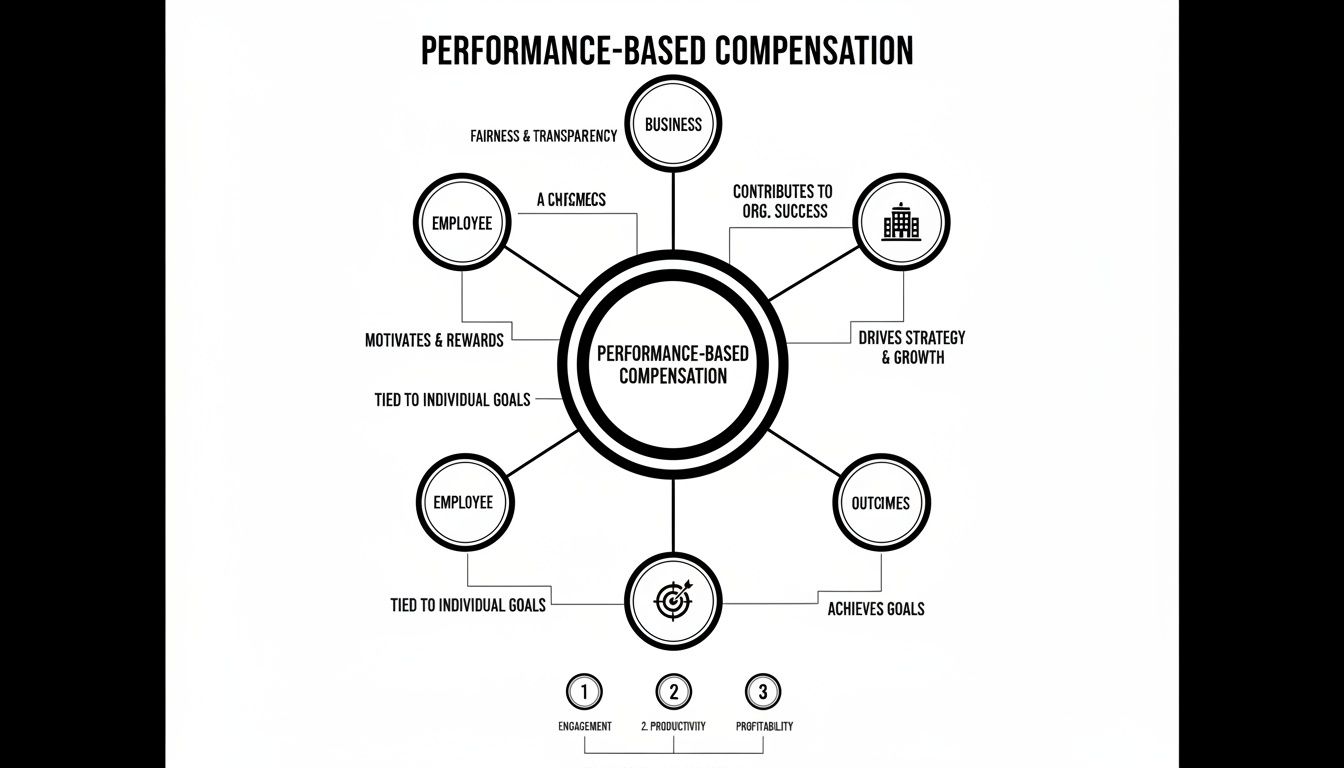
When structured correctly, it's a powerful feedback loop: individual performance fuels business success, which in turn fuels bigger rewards.
Straightforward Commissions
This is the purest form of pay-for-performance. It's a direct, one-to-one link between a sale and a reward.
Imagine a farmer getting paid for every bushel of apples they sell at the market. The more they sell, the more they earn. It's simple, powerful, and leaves no room for confusion.
How it Works: The partner or employee earns a set percentage of the revenue from a deal they closed. For example, a SaaS affiliate might earn a 20% commission on the first year's subscription for every new customer they bring in.
Best For: Roles where the primary goal is closing deals. This is the bread and butter for sales teams, affiliate programs, and referral partnerships.
Performance Bonuses
Unlike commissions that scale with every sale, bonuses are lump-sum rewards tied to hitting specific, pre-agreed targets.
Think of a construction crew being promised a hefty bonus if they finish a project ahead of schedule and under budget. The reward is for hitting a major goal, not just for the day-to-day work.
Bonuses are incredibly versatile and can be tailored to almost any goal:
Individual Bonuses: Reward a single person for hitting a personal KPI, like a support agent who maintains a 95% customer satisfaction score for the quarter.
Team-Based Bonuses: Awarded when a whole team crushes a collective target, like the marketing team generating 1,000 qualified leads in a month.
Project Milestone Bonuses: Paid out for completing key stages of a long-term project, keeping the whole team motivated and on track.
Tiered and Milestone Rewards
This model adds a compelling twist to standard commissions or bonuses, creating escalating rewards for higher performance. It's like a video game where you unlock better gear as you level up. The structure is designed to reward consistency and push your best performers to new heights.
For affiliate and partner programs, this is a game-changer. For example, you could structure your commissions like this:
Tier 1 (1-10 sales/month): 20% commission
Tier 2 (11-25 sales/month): 25% commission
Tier 3 (26+ sales/month): 30% commission
This gives partners a clear path to higher earnings, motivating them to invest more of their time and resources into promoting your business.
Key Takeaway: Tiered systems are all about turning good partners into great ones. You're giving them a roadmap to better rewards, which gives them a powerful reason to go the extra mile.
Profit Sharing and Revenue Sharing
These models zoom out from individual performance to reward people based on the company's overall health. With profit sharing, it's like the entire farm crew getting a piece of the profits after all the crops are sold and the bills are paid. Everyone wins when the farm has a great year.
Revenue sharing works on a similar principle but is based on top-line revenue rather than bottom-line profit. If you want to dive deeper into that specific model, our guide on revenue share agreements has you covered.
How it Works: The company sets aside a percentage of its profits or revenue, which is then distributed among eligible team members, usually on a quarterly or annual basis.
Best For: Cultivating a powerful sense of ownership across the entire company. It gets everyone—from engineering to marketing—thinking like an owner and focused on how their work contributes to the bottom line.
The Real Advantages and Potential Pitfalls
Bringing a performance-based compensation model into your business can feel like strapping a rocket to your growth plans. But just like a rocket, it needs careful engineering. A well-designed plan aligns everyone's ambition with the company's success, creating a powerful engine for growth. Get it wrong, though, and you risk creating unintended consequences that can poison your culture.
So, let's get into the balanced reality of this pay strategy, starting with why it's so compelling.
Why Performance-Based Pay Works
The biggest win here is its power to supercharge motivation. When your team or partners can draw a straight line from their effort to their paycheck, it creates a massive incentive to bring their A-game. This isn't just theory—organizations using these kinds of pay structures saw a 12% jump in employee engagement compared to those sticking with flat salaries.
That extra engagement translates directly to the bottom line. Companies that tie compensation to performance tend to achieve 30% higher total shareholder returns. It's a clear signal that when people have skin in the game, they play to win.
This kind of model is also a magnet for top talent. High achievers are naturally drawn to places where their contributions are measured and rewarded. They want a system that values results over just putting in the hours, and a performance-based structure tells them your company is a meritocracy. This helps you not only attract but also keep the people who will push your business forward.
Finally, it builds a deep sense of ownership. When a slice of someone's pay is tied to company success—through bonuses, profit-sharing, or commissions—they start thinking less like an employee and more like an owner. This mindset naturally encourages smarter decisions, proactive problem-solving, and a collective drive to innovate.
Navigating the Potential Risks
For all its benefits, performance-based compensation isn't a silver bullet. One of the most common traps is fostering unhealthy internal competition. If incentives are purely individual, you might see team members hoarding information or chasing their own metrics at the expense of collaboration. Teamwork can quickly fall apart.
Another major risk is promoting short-term thinking. If a plan heavily rewards hitting monthly or quarterly numbers, people might be tempted to take shortcuts that boost immediate results but damage long-term customer relationships or product quality. Think of a sales rep who overpromises on features to close a deal this quarter, leaving the support team to clean up the mess later.
It's essential to build a system that rewards the right behaviors, not just the easiest metrics to hit. The goal is sustainable growth, not a series of short-lived victories that come at a long-term cost.
On top of that, these systems can create fairness issues if you aren't careful. Without clear, objective metrics, compensation can feel arbitrary, which is a fast way to erode trust in leadership.
Pros and Cons of Performance Based Compensation
To make a smart decision, it helps to see the good and the bad laid out side-by-side. This table offers a clear snapshot of what you're signing up for.
| Advantages | Disadvantages |
|---|---|
| Increased Motivation: Directly links effort to financial reward, encouraging higher performance. | Unhealthy Competition: Can pit individuals against each other, hindering teamwork. |
| Attracts Top Talent: High performers are drawn to environments that reward results. | Short-Term Focus: May incentivize actions that harm long-term company health. |
| Fosters Ownership: Aligns individual goals with company success, creating an owner's mindset. | Income Instability: Variable pay can create financial stress for employees. |
| Clear Performance Metrics: Encourages transparency and accountability around key business goals. | Risk of Unfairness: Can lead to perceived bias if metrics are not objective and clear. |
Ultimately, whether a performance-based pay structure succeeds or fails comes down to thoughtful design and transparent communication. By understanding both the incredible upside and the potential pitfalls, you can build a program that genuinely motivates your team while protecting the culture you've worked so hard to create.
How to Set KPIs That Actually Drive Performance
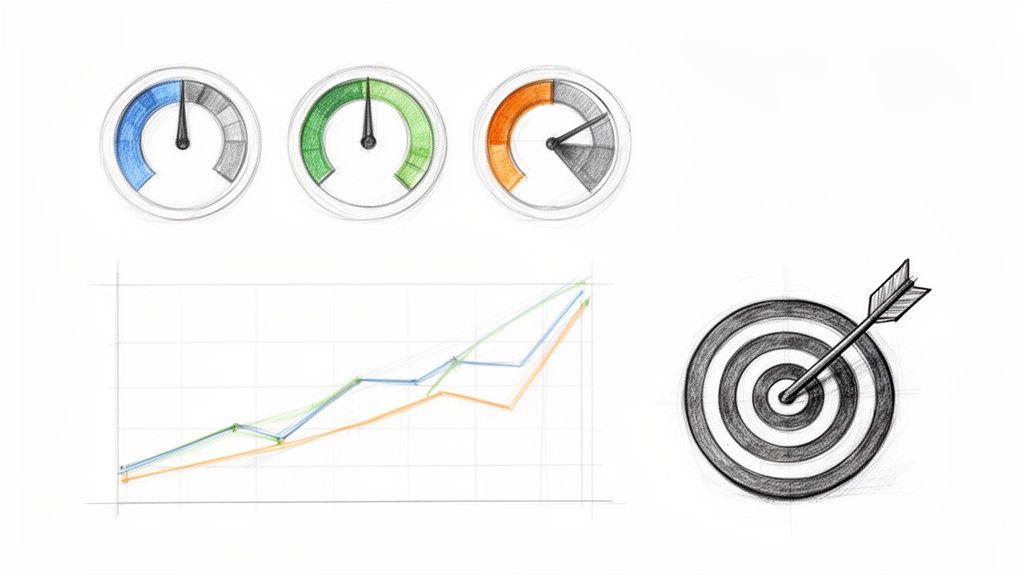
A performance-based compensation model is only as strong as the metrics that power it. Think of Key Performance Indicators (KPIs) as the GPS for your program; without the right coordinates, your team or partners might be driving hard, but they'll be going in the wrong direction. Generic goals like "increase sales" are just too vague and leave far too much room for confusion.
Effective KPIs are different. They're specific, measurable, and tied directly to the outcomes that actually matter to your business. They translate your big-picture goals into clear, actionable targets for individuals or teams. This is the clarity that transforms a compensation plan from a simple expense into a strategic investment in growth.
The SMART Framework for Goal Setting
To move past fuzzy objectives and into real results, the SMART framework is an essential tool. It's a simple but powerful checklist that ensures every KPI you set is robust, clear, and actually designed to work. Let's break down what this means in practice for an online business.
Specific: Goals have to be crystal clear. Instead of "get more affiliates," a specific goal is, "Recruit 25 new SaaS-focused affiliates." Everyone knows exactly what the target is.
Measurable: You have to be able to track progress with real numbers. "Improve customer loyalty" is nice, but it's hard to measure. "Increase the customer repeat purchase rate to 20%," on the other hand, is concrete.
Achievable: The goal needs to be a stretch, but not a fantasy. Setting a revenue target 10x higher than last quarter is more likely to demotivate your team than inspire them. A challenging but realistic 25% increase is a much better target.
Relevant: The KPI absolutely must align with your bigger company goals. If your company is focused on moving upmarket, a relevant KPI is, "Generate 50 enterprise-level leads," not just, "Increase total leads."
Time-Bound: Every single goal needs a deadline. "Increase new MRR from referrals by $10,000 within Q3" creates a sense of urgency and gives you a clear timeline for evaluation.
Using this structure strips away the guesswork and gives everyone involved a shared definition of what success looks like.
Tailoring KPIs to Your Business Model
The right KPIs are never one-size-fits-all. They have to reflect the unique value drivers of your specific business. What works for a subscription software company is going to be completely different from what drives an e-commerce store or a digital creator.
Here are a few examples of role-specific KPIs:
For a SaaS Business: The game is all about long-term, recurring revenue. A fantastic KPI is New Monthly Recurring Revenue (MRR) generated from a partner's referrals, or the Customer Lifetime Value (CLV) of the users they bring in.
For an E-commerce Store: Here, the focus is often on transaction volume and value. You'd want to track KPIs like Average Order Value (AOV) from affiliate traffic or the Conversion Rate on clicks from a specific campaign.
For an Online Course Creator: Success is measured by audience growth and deep engagement. A key KPI could be the number of new student enrollments from a referral program or the percentage of referred students who actually complete the course.
Key Insight: The most effective KPIs measure value, not just activity. Instead of getting bogged down in clicks, focus on tracking the actions that directly contribute to revenue and long-term business health.
The Critical Role of Transparency and Tracking
Setting great KPIs is only half the battle. If your partners or team members can't see how their efforts are translating into results, their motivation is going to evaporate—fast. This is where transparency becomes completely non-negotiable.
Real-time tracking is the foundation of any trustworthy performance-based compensation program. When everyone can see the clicks, conversions, and commissions as they happen, it eliminates suspicion and builds deep confidence that the system is fair.
Using a dedicated platform to create a shared dashboard is essential here. It provides a single source of truth, making sure everyone is aligned on the same numbers and can see their progress toward their goals. This visibility empowers your partners to adjust their strategies on the fly and double down on what's working, creating a powerful feedback loop that accelerates results for everyone.
Performance Based Compensation in Action
Models and theories are great, but the real magic happens when you see performance-based compensation working in the wild. This is where it all clicks. The true power of these structures isn't just in paying for sales—it's in their flexibility to solve specific business problems and drive targeted growth.
To bring these ideas to life, let's walk through three common scenarios for online businesses. Each story follows a simple path from a clear goal to a measurable outcome, giving you a blueprint you can adapt for your own company.
Scenario 1: The SaaS Startup and Tiered Affiliates
Let's imagine a promising SaaS startup, "ConnectSphere." They have a great product for small teams but are struggling to break into the much more valuable enterprise market. Their current affiliate program pays a flat 20% commission, which is fine for small accounts but doesn't give partners the push they need to go after bigger, more complex deals.
The Goal: Get more enterprise-level clients with higher lifetime value (LTV) through their affiliate channel.
The Structure: They switch to a tiered commission model. Partners still get 20% for standard accounts. But—and this is the key—if they refer a client to the "Enterprise" plan, their commission jumps to 30%. To sweeten the deal, any partner who brings in three or more enterprise clients in a single quarter gets a $1,000 milestone bonus.
The KPIs: The main metric is the new enterprise MRR (Monthly Recurring Revenue) each affiliate generates. They also keep an eye on the lead-to-close rate for these bigger deals and how much they're paying out in bonuses.
The Outcome: Suddenly, top-tier affiliates who have audiences full of larger companies have a serious financial reason to push ConnectSphere's enterprise plan. The tiered structure directly rewards the exact high-value action the company wants, perfectly aligning partner motivation with the strategic goal of moving upmarket.
This example proves performance-based pay isn't just about rewarding volume; it's about rewarding value.
By creating a clear financial pathway for high-value referrals, the SaaS company effectively turns its affiliate program into a specialized sales force for its most important customer segment.
Scenario 2: The E-commerce Brand Launching a New Product
Next up is "GlowEco," an e-commerce brand known for sustainable skincare. They're about to launch a new line of organic hair care products and need to make a splash—fast. To get immediate buzz and sales velocity, they're leaning heavily on their influencer partners.
The Goal: Drive a massive wave of initial sales for the new hair care line within the first 30 days of launch.
The Structure: GlowEco rolls out a hybrid commission-plus-bonus model just for the launch. For one month, influencers earn a boosted 25% commission on all hair care products (up from their usual 15%). On top of that, any partner whose code is used for over 100 sales of the new products gets a $500 cash bonus.
The KPIs: The big ones are the total sales volume of the new line and the number of partners who hit the sales bonus. They also track the conversion rate from influencer landing pages to see who is really driving results.
The Outcome: The higher commission creates a sense of urgency, while the achievable bonus gives influencers a clear target to rally their audience around. This structure encourages a concentrated promotional blitz right at launch, helping the new line get the critical momentum and social proof it needs to succeed.
Scenario 3: The Course Creator Building a Student Base
Finally, meet "Dr. Anya," an independent expert who just launched a comprehensive online course on digital marketing. She has a small but loyal audience and wants to use word-of-mouth to grow her student numbers without spending a fortune on ads.
The Goal: Increase new student sign-ups through trusted, authentic referrals from her current students.
The Structure: She sets up a dead-simple two-sided referral program. When a current student refers a friend who signs up, the referrer gets a $50 cash reward, and the new student gets a 15% discount on the course. Everyone wins.
The KPIs: She keeps it simple, tracking the number of successful referrals each month and the overall percentage of new students coming from her referral program.
The Outcome: This model turns happy students into active brand advocates. The cash gives them a real reason to share, and the discount gives their friends a compelling nudge to enroll. It creates a powerful viral loop that's both cost-effective and built on trust—a recommendation from a peer is always more convincing than an ad.
A Practical Guide to Launching Your Program
Alright, you've got the theory down. Now it's time to turn that idea into a real, working performance-based compensation plan. But launching a program like this isn't as simple as flipping a switch. It takes a deliberate, step-by-step approach to make sure everyone involved is clear on the rules, trusts the system, and is fired up to participate.
Here's a practical roadmap to get your program off the ground without a hitch.
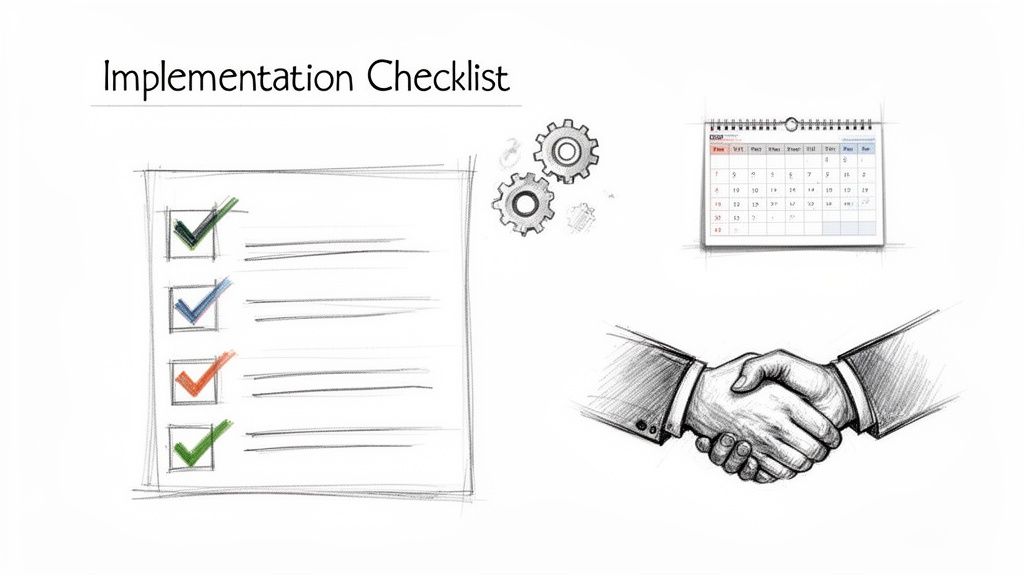
The absolute bedrock of a great program is clarity. If your partners are even a little bit confused about how they get paid, their motivation will evaporate.
Building a Solid Foundation
Before you even think about inviting your first partner, you need to nail down the ground rules. This starts with a rock-solid Terms of Service (TOS) document. Think of it as the constitution for your program—it needs to be simple, fair, and leave zero room for interpretation.
Your TOS has to spell out the essentials:
Eligibility Requirements: Who is actually allowed to join?
Commission Structures: How much do people earn, and for what specific actions?
Payment Terms: When and how do you process payouts?
Program Rules: What are the dos and don'ts of promoting your brand?
Beyond the legal stuff, you have to define goals that are actually achievable. Use the SMART framework to set initial targets that stretch your partners but don't break their spirits. Setting the bar impossibly high from day one is the fastest way to kill a program before it even starts.
Key Insight: A well-written Terms of Service isn't just a legal shield; it's your best tool for preventing future headaches. It protects both you and your partners by making sure everyone is on the same page from the get-go.
Communicating and Automating for Success
With the framework in place, it's time to spread the word. Announce the program with energy, focusing on the benefits and walking everyone through exactly how it works. A kickoff call or a detailed onboarding guide can make a world of difference, giving new partners the confidence they need to start strong.
This is also the moment you have to ditch the spreadsheets. Trying to manually track clicks, conversions, and payouts is a disaster waiting to happen. It's a surefire recipe for mistakes, delays, and completely eroding the trust you're trying to build. For any program with real scale, automation is not a luxury—it's a necessity.
A platform like Blossu is built to handle all of this for you. It takes the administrative nightmare off your plate by providing:
Automated Tracking: Every click and conversion is attributed accurately, creating a single source of truth that everyone can trust.
Real-Time Dashboards: You and your partners get total visibility into performance, which fosters transparency and keeps everyone motivated.
Effortless Payouts: Commission calculations and payments are handled automatically, so everyone gets paid the right amount, right on time.
When you automate the grunt work, you free yourself up to focus on what really matters: building strong relationships with your partners and strategically growing the program. That combination of clear rules, great communication, and reliable technology is the secret to launching a compensation plan that actually drives long-term growth.
Frequently Asked Questions
Have a question not in here? Contact us
- Is Performance-Based Compensation Just a Sales Thing?
Not at all. While sales teams are the classic example because their numbers are so clear, this model is incredibly flexible. Think about it: a marketing team can be rewarded for hitting lead quality targets or conversion rates. Your customer support crew could earn bonuses for keeping customer satisfaction scores sky-high. You could even incentivize product teams with milestone bonuses for shipping new features on schedule.
- How Do You Keep the System Fair and Transparent?
Fairness really boils down to two things: crystal-clear, objective KPIs and unbiased tracking. Everyone on board needs to know exactly what the goal line looks like and feel confident that the goals are actually reachable. Transparency isn't optional. When you use an automated platform with a real-time dashboard, it creates a single source of truth. Both you and your partners see the same numbers, which kills any suspicion that the system is rigged or unfair.
- What's the Smartest Way to Get Started?
If you're new to this, don't feel like you have to flip your entire compensation model on its head overnight. The best approach is to start small with a pilot program. Pick one team or a single campaign—like a new affiliate launch—and test out a simple performance model for a limited time, maybe a quarter. This is a low-risk way to gather real data, get honest feedback, and tweak your approach before you roll it out to everyone. It's the perfect way to learn what works for your business without causing a huge disruption.
🎯 Key Takeaways
Performance-based compensation ties earnings directly to results through commissions, bonuses, and profit sharing
85% of companies now use performance-based pay, driving 12% higher employee engagement and 30% better returns
Choose models that align with your goals: commissions for sales, bonuses for milestones, tiers for growth
Set SMART KPIs that are specific, measurable, achievable, relevant, and time-bound
Transparency and automation are essential - use real-time dashboards to build trust and eliminate manual errors
🚀 Ready to Launch Your Performance-Based Program?
Ready to put performance-based compensation on autopilot? With Blossu, you can launch a referral or affiliate program in minutes, automate tracking, and manage payouts effortlessly. Start for free and turn your biggest fans into your best growth channel.