
Build a Referral Program for Small Business That Drives Growth
A referral program is one of the oldest growth tricks in the book, but for a small business, it's far more than just a marketing tactic. It's a strategy that pays your best customers to spread the word about what you do.
You're essentially turning your happiest, most loyal customers into a dedicated—and incredibly convincing—sales team.
Why Your Business Needs a Referral Program
Let's be clear: a referral program isn't just another item to tick off your marketing to-do list. It's a genuine growth engine. For e-commerce stores, SaaS startups, and anyone selling digital products, it's a powerful tool for scaling your business in a way that feels authentic.
In a market flooded with noise, building on the trust your customers already have isn't just a good idea—it's essential for survival.
Referrals work because they tap into the single most potent marketing force on the planet: a recommendation from a friend. Unlike a paid ad that interrupts someone's day, a referral lands with a built-in layer of trust and social proof. That's why a staggering 52% of U.S. small businesses say referrals are their number one source for new business.
When a friend tells you to check something out, that wall of skepticism most of us have just melts away, making the path to a sale incredibly smooth.
The True Value of a Referred Customer
The magic of a referral program goes way beyond just bringing in new leads. Customers who come to you through a referral are a completely different breed. They show up already trusting you, and that trust translates directly into better business outcomes.
Here's what that actually looks like:
Sky-High Conversion Rates: Leads from referrals convert like crazy because they've been "warmed up" by someone they already know and trust. The sales pitch is practically done before they even land on your site.
Fierce Customer Loyalty: These customers tend to stick around for the long haul. The positive first impression from a friend's recommendation creates a much stronger initial bond with your brand.
Dramatically Lower Acquisition Costs: You get to sidestep the ever-rising costs of paid ads, making every new customer you acquire more profitable from the get-go.
The bottom line is simple: you're not just getting more customers. You're getting better customers who are more likely to become advocates themselves, kicking off a self-perpetuating cycle of growth.
To put it in perspective, let's look at how referral marketing stacks up against the usual suspects in your marketing budget.
Referral Marketing ROI vs Traditional Channels
This table offers a direct comparison of key performance indicators, showing why referral marketing often delivers superior value and efficiency for small businesses compared to more common advertising methods.
| Metric | Referral Marketing | Paid Social Ads | Cold Outreach |
|---|---|---|---|
| Customer Acquisition Cost (CAC) | Extremely low; typically just the cost of the reward. | High and volatile; constantly needs budget to sustain. | High due to time, labor, and low response rates. |
| Conversion Rate | Very high; leads are pre-qualified and trust the source. | Low to moderate; requires a high volume of impressions. | Extremely low; often less than 1-2%. |
| Customer Lifetime Value (CLV) | Highest; referred customers are more loyal and spend more. | Moderate; depends heavily on targeting and ad quality. | Lowest; leads have no prior relationship or trust. |
| Trust Factor | Built-in from day one through a personal recommendation. | Low; often viewed as disruptive and met with skepticism. | Non-existent; you're starting from absolute zero. |
The data is clear. While paid ads and outreach have their place, nothing beats the efficiency and long-term value of a customer who was sent your way by someone they trust.
The Rapidly Growing Referral Economy
This isn't just a gut feeling; the market data tells the same story. The demand for referral management software is exploding, signaling a huge shift in how businesses are thinking about growth.
The global market for these tools recently jumped from $4.81 billion to $5.69 billion—a massive 18.3% annual growth rate. It's projected to hit $10.82 billion by 2029. This surge is being driven by smart SaaS and e-commerce brands that are automating their word-of-mouth to create a predictable, scalable source of revenue.
For a small business, this is a massive opportunity. While big companies have huge teams managing these programs, modern tools have leveled the playing field. You can now easily launch a sophisticated program that tracks who is sending you customers, measures conversions, and automatically sends out rewards—all without a complex tech team or a huge budget.
It's your chance to compete with the giants by building a passionate community of brand champions who are excited to help you grow.
Designing a Referral Program That Actually Works
Let's move from a cool idea to something that actually drives growth. A powerful referral program isn't built on guesswork; it's a smart system designed with clear goals and incentives your customers can't resist. Before you even think about the marketing copy, you need to answer one simple question: what are you trying to achieve?
Are you hunting for a flood of new leads for your sales team? Or is your main goal to drive direct, immediate sales for your e-commerce store? Maybe you just want to create some buzz and get your name out there on social media. Each of these goals demands a totally different approach.
First, Nail Down Your Program's Core Objective
Your central goal is the compass for every other decision you'll make, from the rewards you offer to how you measure success. Without a clear target, your program will feel random, and you'll have no real way to know if it's working.
Here are a few common goals we see with small businesses:
Driving Sales: This is the most straightforward goal, perfect for e-commerce shops and anyone selling digital products. Success is simple: how much revenue did referrals bring in?
Generating Qualified Leads: This is a great fit for B2B services or businesses selling high-ticket items. The program rewards people for bringing in prospects who are a good fit, even if they don't buy right away.
Boosting Brand Awareness: Here, the focus is on rewarding shares, mentions, and social engagement. It's fantastic for new businesses trying to get on the map, but it can be tougher to tie directly to sales.
Increasing Customer Loyalty: You can structure rewards to encourage repeat business from both the referrer and the new customer, making everyone feel more connected to your brand.
This simple decision tree can help you figure out if a referral program is the right move for you right now.
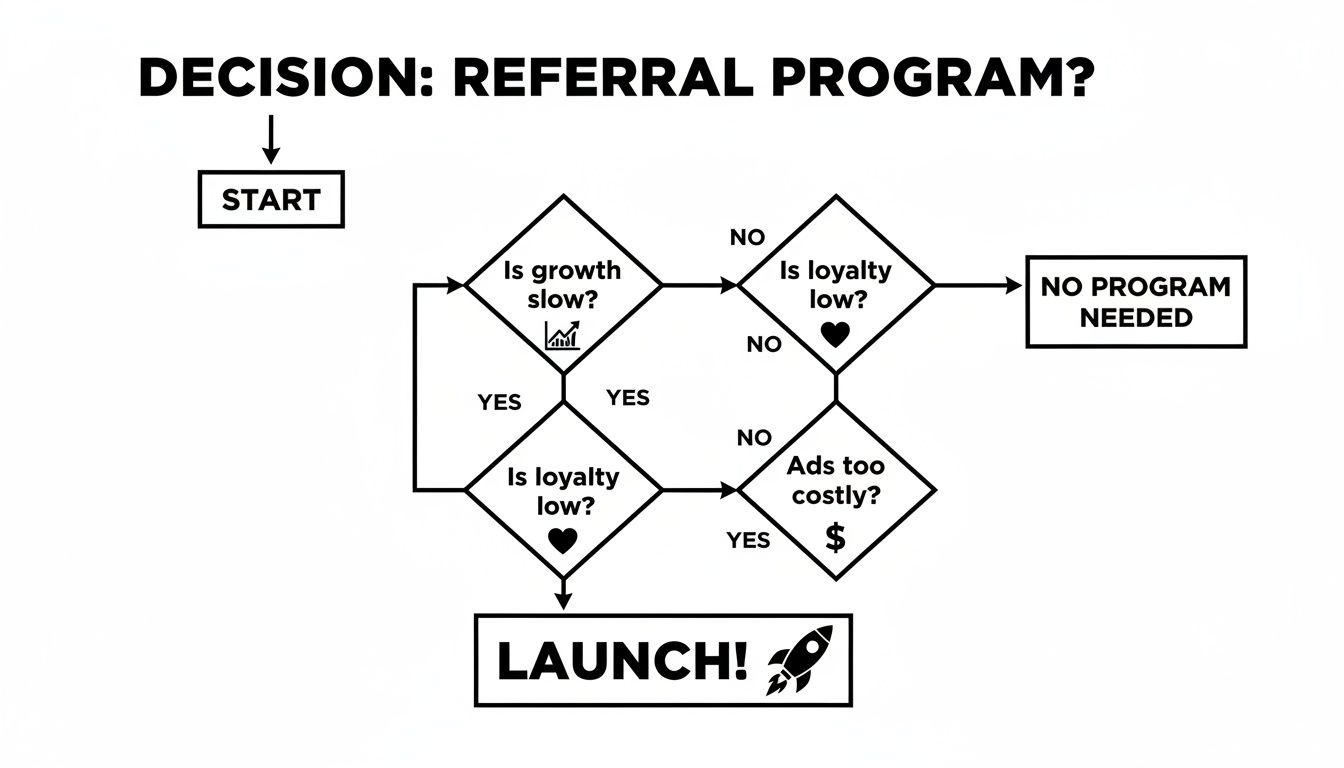
As you can see, if you're dealing with slow growth, low customer loyalty, or sky-high ad costs, it's probably a strong signal that it's time to get a program off the ground.
Crafting Incentives That Truly Motivate
Once you know your "why," it's time to pick rewards that get people genuinely excited to share. The right incentive makes referring a friend feel like a win-win, not a chore. The real secret is to find a reward that makes sense for your business model and lines up with what your customers actually want.
Get this part wrong, and you're leaving a shocking amount of money on the table. The data is clear: referred customers have 37% higher retention rates and convert 30% better than leads from any other channel. With 86% of consumers trusting recommendations from people they know over ads, it's a goldmine. Yet, a staggering 60% of consumers have never even been asked to join a referral program.
Key Insight: The best referral rewards offer genuine, tangible value. A generic 5% discount probably won't get anyone off the couch. But a hefty store credit, an exclusive feature, or a desirable gift card? That just might be the tipping point that gets them talking.
Let's break down the most common incentive models to help you find the perfect fit.
Choosing the Right Referral Incentive Model
Picking the right reward structure is critical. It needs to feel generous to your customers while staying profitable for you. This table breaks down the most popular options to help you decide.
| Incentive Type | Best For | Pros | Cons |
|---|---|---|---|
| Cash or Gift Cards | SaaS, high-value services | Highly motivating and universally appealing. Easy to understand and manage. | Can attract low-quality referrers just seeking cash. Doesn't encourage brand loyalty. |
| Store Credit or Discounts | E-commerce, subscription services | Encourages repeat business from both parties. Cost-effective, as the cost is your product margin. | Only valuable to customers who plan to purchase again. Less appealing for one-time buys. |
| Free Products or Upgrades | Digital products, SaaS with tiered plans | High perceived value at a low marginal cost for you. Strengthens product adoption. | May not appeal to all customers, especially those happy with their current plan. |
| Exclusive Perks | Community-based brands, service businesses | Builds a sense of community and exclusivity. Fosters long-term brand advocacy. | Value is subjective and can be difficult to quantify. Requires ongoing management. |
Ultimately, the best referral program for a small business is one your customers love and your finances can support. Don't be afraid to just ask your best customers what they'd find most valuable—their answers might surprise you. It's also important to know what kind of program you're building. For a deeper dive, check out our guide on the key differences between an affiliate program vs referral program.
Picking the Right Tech to Power Your Program
Alright, you've defined your goals and picked your incentives. Now it's time to build the engine that actually runs your referral program. The right technology isn't just a nice-to-have; it's the foundation for accurate tracking, seamless rewards, and a user experience that genuinely encourages people to share.
For a small business, this choice usually boils down to two paths: a scrappy manual approach or dedicated referral software.
You could try a DIY setup with spreadsheets and unique discount codes. It gives you total control and costs next to nothing upfront. But let me tell you from experience, this becomes a time-consuming nightmare the moment you get any traction. Manually tracking every click, verifying each sale, and processing payouts is a surefire recipe for mistakes and burnout.
This is exactly why most small businesses quickly pivot to specialized software. These platforms are built to automate the entire process, freeing up your time and making sure the program runs smoothly in the background while you focus on your business.
What to Look for in a Referral Platform
Choosing referral software can feel a bit overwhelming, but a few core features are absolutely non-negotiable if you want to run a program that works. Think of these as the essential components that prevent headaches and actually drive results. The goal is to find a tool that's powerful but simple enough to set up and let it do its thing.
Make sure any platform you consider nails these key areas:
Automated Tracking and Attribution: This is the big one. The system must reliably connect a referral to a new customer. This is usually handled with unique referral links and cookies that track the user's journey from their first click to the final sale.
Simple Payout Management: Manually calculating and sending rewards is a massive time-sink. The best tools integrate directly with payment systems like Stripe or PayPal to handle commissions automatically. This ensures your partners get paid accurately and on time, every time.
Real-Time Dashboards: You and your referrers both need to see what's happening. A good platform provides a clean, clear dashboard showing clicks, conversions, and earnings, which keeps your partners motivated and in the loop.
Easy Integration: The software should plug right into your existing website or e-commerce platform (like Shopify or WooCommerce) without needing a team of developers to make it work.
Pro Tip: Look for a platform that offers unlimited tracking and partners without nickel-and-diming you for every conversion. A pricing model like the one we offer at Blossu aligns with your growth—you pay a simple flat fee, no matter how successful your program becomes.
The Power of a Dedicated Dashboard
A dedicated dashboard is the central hub for all your referral activity. For you, it's a quick glance at key metrics like share rate, conversion rate, and who your top performers are. For your partners, it's their personal command center where they can grab their unique link, track their progress, and watch their earnings grow.
This is what a clean, intuitive dashboard looks like. It gives referrers everything they need to succeed without any clutter.
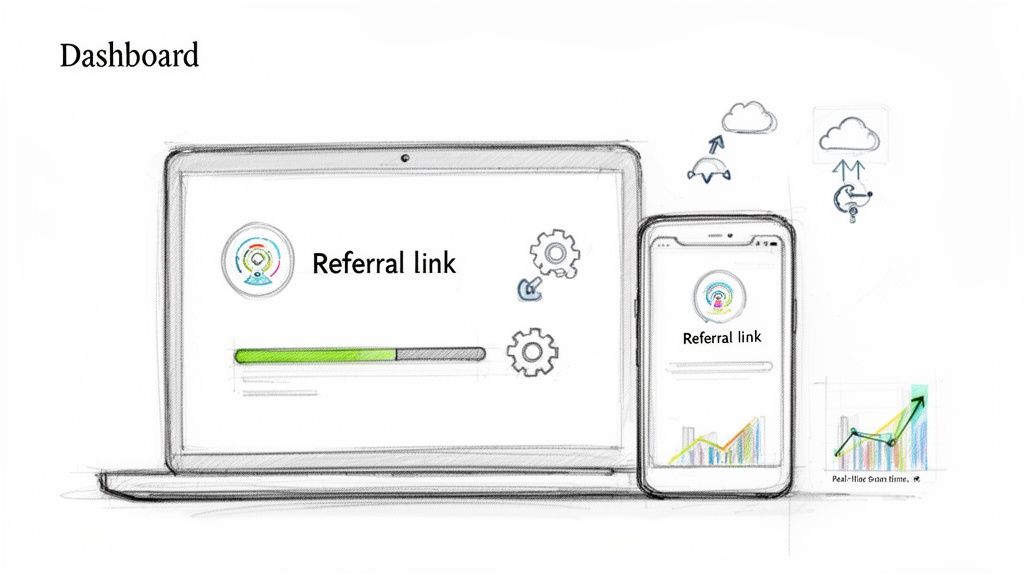
The clarity and immediate feedback from a dashboard like this are crucial. It's what keeps your partners engaged and actively promoting your business day after day.
Making Sure Legal and UX Are in Sync
Finally, your tech needs to handle the less glamorous—but critically important—parts of a referral program: user experience and legal compliance.
Your referral process has to be frictionless. If it takes someone more than a couple of clicks to share, they just won't bother. It's that simple.
From a legal standpoint, transparency is everything. The Federal Trade Commission (FTC) requires clear disclosure when a referrer is getting paid for their endorsement. Your platform should make it easy to display your terms and conditions and give partners clear guidance on how to disclose their relationship (like using hashtags such as #ad or #sponsored on social media).
A small business can't afford the hefty fines that come with non-compliance. Choosing a tool that supports these best practices isn't just about tech; it's a smart investment in your brand's reputation.
Launching and Promoting Your Referral Program
You've built a killer referral program with rewards people will actually want. The tech is humming along perfectly. Now for the make-or-break part: making sure people know it exists.
A referral program that launches to crickets is a failed program. You need a game plan to get the word out and drive sign-ups from the second you go live.
Your journey starts by recruiting your very first advocates. Don't just blast your entire email list. Instead, zero in on the people who already love what you do—your most loyal, long-time customers. These are the folks leaving you 5-star reviews, shouting you out on social media, and buying from you again and again.
A great referral program runs on genuine enthusiasm. A personal invitation to this core group makes them feel like VIPs, turning them into your most powerful and authentic champions right out of the gate.
Creating a Smooth Onboarding Experience
Once you've handpicked your initial advocates, your next job is to make sharing ridiculously easy for them. If it feels like work, they simply won't do it. The entire onboarding process should be so simple they can start referring people in minutes.
The goal is to remove every ounce of friction. That means arming them with pre-made assets they can copy, paste, and share without a second thought.
Email Templates: Write a few short, punchy email templates they can fire off to friends. Make sure their unique referral link is front and center, along with a clear "what's in it for me" for both the sender and the recipient.
Social Media Snippets: Craft ready-to-use posts for platforms like X, Facebook, and LinkedIn. Keep the tone personal and authentic, not like a stiff corporate announcement.
Visual Assets: Create a few simple graphics or banners they can share. A good visual will always grab more attention than a block of text.
Think of it as giving them a "promotional starter kit." The less they have to think, the more likely they are to act.
Spreading the Word Across Multiple Channels
With your first wave of advocates ready to go, it's time to cast a wider net. The key here is to weave your referral program into every logical customer touchpoint. It should feel like a visible, ever-present opportunity, not a hidden feature.
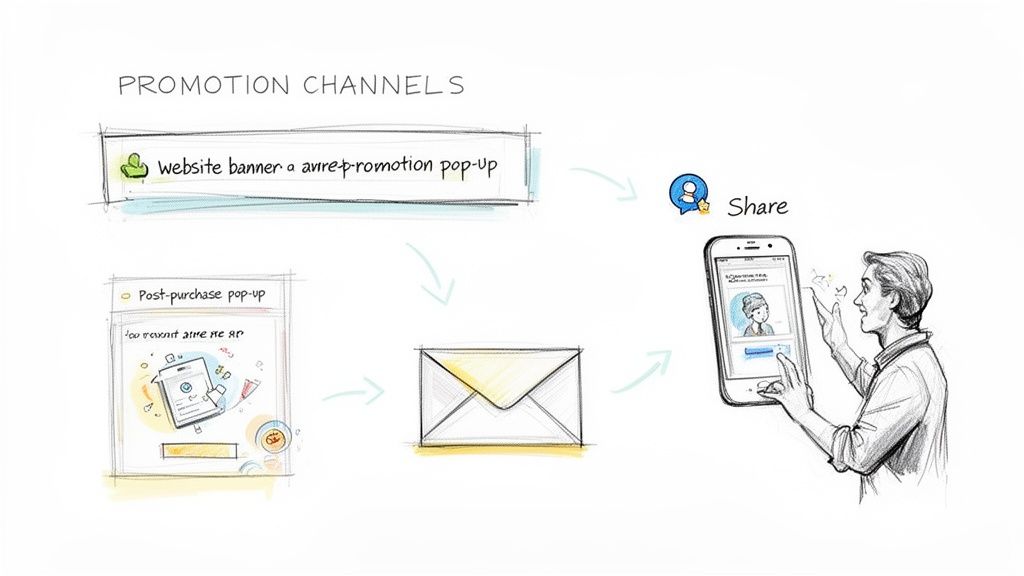
This multi-channel approach ensures you catch customers when they're most engaged and feeling good about your brand.
Key Takeaway: Promotion isn't a one-time launch email. It's an ongoing effort to remind customers that sharing is a valuable and rewarding action.
Here are the most effective channels to get the word out:
- Your Website: This is ground zero. Add a prominent banner to your homepage or create a dedicated landing page. A simple "Refer a Friend" link in your main navigation or footer ensures the program is always just a click away.
- Post-Purchase Experience: The moment right after a customer buys something is pure gold. They're excited and happy. Use a pop-up on the thank-you page or a follow-up email to invite them to share that positive feeling.
- Email Marketing: Don't just send one announcement and call it a day. Weave mentions of your referral program into regular newsletters, order confirmations, and shipping notifications. For more ideas on this, check out our comprehensive email marketing automation guide.
- Social Media Blasts: Post about your program regularly. Create some buzz by highlighting your top referrers or showcasing the rewards people are earning. This kind of social proof is incredibly persuasive.
Consistent visibility is what builds momentum. In the world of small business, these referral networks are an absolute powerhouse. A recent report from BNI found its members, mostly entrepreneurs, generated a mind-boggling $26.4 billion USD from over 17.4 million referrals in the last year alone. In the U.S., the average member brought in $62,459 USD in new business, proving the immediate ROI.
How to Measure and Optimize Program Performance
Getting your referral program live is a huge milestone, but it's just the starting line. The real growth doesn't come from the launch day buzz; it comes from a continuous cycle of measuring what's working, figuring out why it's working, and making smart tweaks over time.
Think of your program less like a finished product and more like a living system. Your job now is to listen to the data, understand what your advocates are actually doing, and fine-tune your strategy to get better and better results. This is where a good referral platform becomes your command center for growth.
Defining Your Core Program KPIs
You can't improve what you don't measure. It's easy to get lost in a sea of data, so the key is to zero in on a few Key Performance Indicators (KPIs) that give you a clear, actionable picture of your program's health. These are the numbers that tell the story of how well you're turning happy customers into active advocates.
Your analytics dashboard should put these metrics front and center, helping you spot trends and opportunities without needing a degree in data science.
Here are the absolute essentials for any referral program for small business:
Participation Rate: This is simply the percentage of your total customers who have signed up to be referrers. If this number is low, it's a red flag that you either need to promote the program more aggressively or that your initial offer isn't compelling enough to grab their attention.
Share Rate: This measures how many of your enrolled advocates are actually sharing their referral links. High participation but low sharing is a classic sign of friction. It could mean the sharing process is too clunky or that you haven't given them easy-to-use creative assets.
Conversion Rate: This is the big one—the percentage of referral clicks that turn into actual sales or qualified leads. If you have a high share rate but a dismal conversion rate, it often points to a disconnect between the referral promise and the landing page experience, or an offer that just isn't exciting enough for new customers.
Pro Tip: Don't just look at these numbers in a vacuum. Context is everything. For instance, if your conversion rate is fantastic (say, 25%) but your participation rate is tiny (less than 1%), your immediate job isn't to tweak the offer. It's to go all-in on promotion and recruitment.
Uncovering Insights from Your Data
Once you're consistently tracking these KPIs, you can start digging deeper to pull out actionable insights. Your analytics dashboard is more than a scoreboard; it's a discovery tool. Look for patterns that tell you what's resonating with your audience and what's falling flat.
As you review the data, start asking the right questions:
Who are my top-performing advocates? What do they have in common?
Which channels are driving the most referral traffic? Email? Social?
Is there a specific drop-off point in the funnel (e.g., lots of clicks but very few sign-ups)?
How does the performance of a cash reward compare to a product credit incentive?
Answering these questions is how you move from just reporting numbers to making informed decisions that directly boost your program's ROI.
A/B Testing Your Way to Better Results
The single most powerful optimization tool in your arsenal is A/B testing. This means running controlled experiments where you change one variable at a time to see what produces better results. It completely removes guesswork from the equation and replaces it with cold, hard data.
Start by testing the elements that are most likely to have a major impact on your core KPIs. You don't need to overhaul your entire program at once; small, incremental changes can lead to huge gains over time.
Here's a simple framework for your first A/B tests:
- Test Your Offer: Pit your current reward against a new one. For example, test a $25 cash bonus against a $40 store credit. See which one drives a higher conversion rate among new customers.
- Test Your Messaging: Try two different headlines on your referral landing page. One might focus on the advocate's benefit ("Give $20, Get $20"), while the other focuses on the friend's benefit ("Help a Friend Save $20").
- Test Your Call-to-Action (CTA): Experiment with different button text in your promotional emails. Does "Start Sharing" outperform "Get Your Referral Link"?
Let each test run long enough to gather statistically significant data before you declare a winner. Over time, these small victories compound, systematically improving every single piece of your referral program's performance.
Answering Your Toughest Referral Program Questions
Even the best-laid plans run into tricky questions. As you start building your referral program, you'll inevitably hit a few spots where you need a clear, direct answer to move forward. This is where most people get stuck.
Think of this as your quick-reference guide for navigating those common hurdles. We're tackling the big questions we hear from business owners all the time—from legal must-haves to managing your own expectations.
Frequently Asked Questions
Have a question not in here? Contact us
- Do I Need a Lawyer to Set This Up?
While you probably don't need to keep a corporate lawyer on retainer for a simple program, you absolutely need rock-solid terms and conditions. These rules aren't just legal fluff; they're your first line of defense against disputes and confusion. They protect you and your partners by setting crystal-clear expectations. Your terms should spell out what a "successful" referral actually is, how and when rewards are paid out, and any key restrictions. The goal here is clarity, not complexity.
- How Much Should I Actually Spend on Rewards?
There's no magic number, but the best starting point is to anchor your reward value to your Customer Acquisition Cost (CAC) and Customer Lifetime Value (CLV). The golden rule? Your referral reward should always be less than what you normally spend to get a new customer through other channels, like paid ads. For example, if you typically spend $100 on ads to land one new customer who will spend $500 with you over time, offering a $25 reward to both the referrer and their friend is an incredible deal.
- What if an Influencer Forgets the Disclosure?
The Federal Trade Commission (FTC) is very clear: any paid endorsement, which absolutely includes referral commissions, must be disclosed. Your best move is to be proactive. Build education right into your onboarding process. Give your partners clear guidelines and even pre-made copy that already includes the necessary disclosures. If someone forgets, a gentle reminder is usually all it takes.
- How Long Until I Start Seeing Real Results?
This is all about managing expectations. A referral program is a long-term growth engine, not an overnight viral sensation. You'll likely see a little burst of activity from your most loyal customers in the first few weeks, but building real, sustainable momentum often takes a few months. Success hinges on consistent promotion and optimization. You have to treat this like a core piece of your marketing strategy, not a "set it and forget it" campaign.
Ready to turn your best customers into your most powerful growth channel? With Blossu, you can launch a fully automated referral program in minutes, not months. Eliminate spreadsheets, automate payouts, and get the real-time data you need to scale. Start your free Blossu plan today and put your word-of-mouth on autopilot.